It’s a dynamic planet, ever changing, changes that can be seen visually, others not by the naked eye. Hyperspectral imaging (HSI) is a technique that captures and analyzes information across the electromagnetic spectrum to produce images with detailed spectral information. OSK’s GHOSt Constellation provides an unmatched capability, with the sensors able to capture the full visible to near infrared and shortwave infrared (VNIR/SWIR) spectral range between 400 - 2500nm, with 468 bands available at an unprecedented 8m GSD, to create a fingerprint, and then allow users to understand what changed.
In late 2024, we were able to convince NGA’s hyperspectral SME, Josh Magarick to join OSK. Josh brings in decades of experience when it comes to chemically fingerprint the planet. Throughout his career he’s been working to keep the world safe from some of the worst chemicals being produced around the planet. The production of these chemicals facilitate weapons of mass destruction, create huge environmental problems by releasing heavy metals into the surroundings, and along with particles released into the atmosphere. And he’s started off with a bang here at OSK.
Anomaly detector algorithms have the ability to detect anomalous spectral signatures within an HSI scene . Such algorithms can provide analysts a first line of defense to understand what’s going on within the data by detecting strange or unusual spectral characteristics that may look different from the rest of the scene.
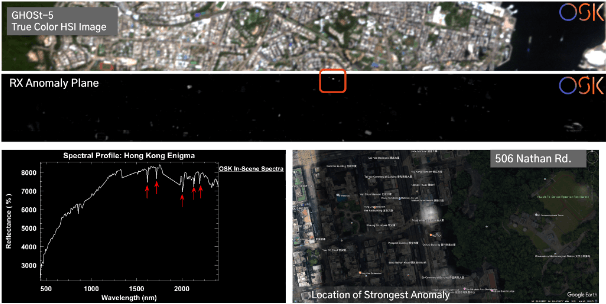
Figure 1: Anomaly detector applied to OSK's GHOSt Constellation data. G5 image captured over Hong Kong
The beauty about hyperspectral data is the available spectrum. With our spectral library, which has a combination of spectra captured by our field spectrometer, along with spectra available publicly, OSK’s analytics team match those spectra and find matches. Josh was able to detect key chemicals that could be viewed as critical and need to be found when assessing different areas of the world. We believe that OSK’s proprietary data is the first commercial dataset available where he was able to find ammonium salts such as CAN-27 (Calcium Ammonium Nitrate), sulphur, Military coatings such as CARC (Chemical Agent Resistant Coating) and more.
Figure 2 shows identification of a potential CARC detection in Hong Kong. Chemical Agent Resistant Coatings are routinely used to camouflage objects or structures.
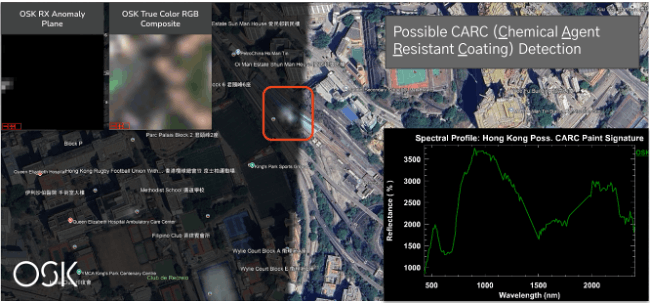
Figure 2. RX Anomaly plane shows possible detection of CARC and spectra
Figures 3 and 4 below show imagery captured by GHOSt 4 on December 3, 2024 and GHOSt 5 on December 25, 2024. An Adaptive Coherence Estimator (ACE) detection plane was calculated and the subsequent detection highlighted in orange in Figure 3. An ACE detector is used as a way of filtering HSI images for specific known spectral signatures of interest. It indicates a probable detection of CAN-27. The dark, transparent overlay represents the approximate footprint of the GHOSt image detection plane.
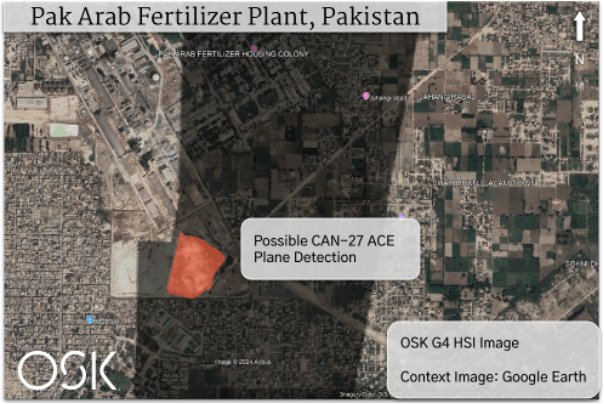
Figure 3. Probable detection of CAN-27 at Pak Arab Fertilizer Plant in Pakistan
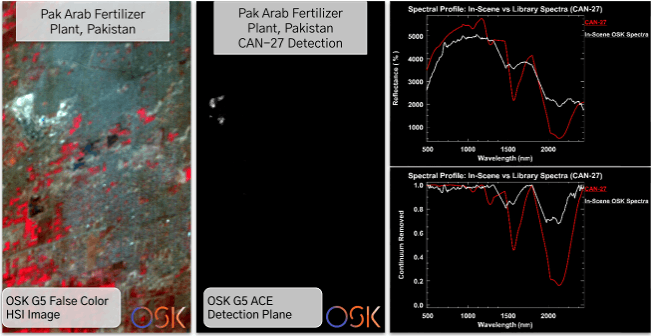
Figure 4: Probable detection of CAN-27 from the same facility with GHOSt 5
Sulfur is a key chemical that is used as an ingredient in many applications. GHOSt 2 captured data over the El Nasr Co. for Intermediate Chemicals, Ain Sokhna, Egypt. This image was captured on December 10, 2024. Sulfur is detected with a very high confidence. OSK is the first commercial company to have detected Sulfur from satellites.
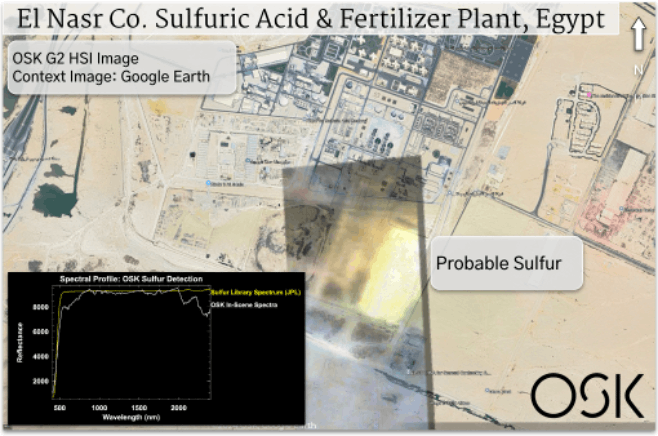
Figure 5. Detection of Sulfur in Egypt
On 16th January 2025, OSK captured data over the Dera Gazi Khan Nuclear Fuels Site in Pakistan. The main goal here was to see if our data was able to extract or match signatures of Ammonium Salts and sure enough we were able to detect them.
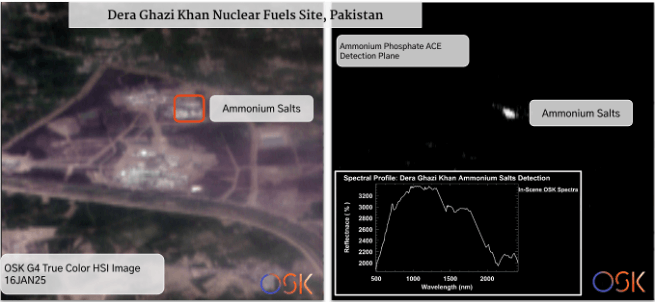
Figure 6: Detection of Ammonium salts over a Nuclear fuels site in Pakistan
Conclusion
Josh continues to extract valuable insights from the GHOSt constellation and we’re working on building it within an automated pipeline that allows us to get a detection of some of these dangerous chemicals within a near real time basis. We believe Hyperspectral data, when used properly and effectively can provide key insights that can service a number of use cases. In this case, particularly in defense applications, our data can help analysts assess, keep near daily checks on dangerous chemicals being produced at various facilities around the world. Join us in capturing and creating the largest spectral library for analyzing spectral signatures across key global locations to build a cutting-edge product that fingerprints changes in near real time. Help us tackle these complex challenges and develop solutions that quantify changes instantly—empowering customers to know now and act fast. Be part of the future of rapid decision-making!